Lymph Savior™ review: eleven names, zero doses
The marketing promises eleven named botanicals with nothing hidden. Every name is printed. Not one amount is. Here is what that gap costs you, which two herbs genuinely earn their place, and what beats a capsule outright. ✅
- Two capsules daily — 60 capsules is exactly 30 servings
- Horse chestnut and gotu kola: two evidence-backed venous herbs
- Eleven names, zero milligram figures — we show why that matters
- Contains caffeine from yerba mate, stated openly ☕
Sold through the official checkout. This page earns a commission on orders placed through its links, which never changes what we publish.
 FDA-registered facility
 GMP certified
 Made in the USA
 Natural botanicals
Lymph Savior is a 60-capsule botanical supplement taken two capsules daily for lymphatic circulation and fluid balance. It names eleven botanicals and discloses the amount of none of them. Two of those eleven — horse chestnut and gotu kola — have genuine human research behind leg swelling, which puts the formula ahead of most rivals. Because the doses are undisclosed, the 180-day money-back guarantee is the only real protection a buyer has.
Key takeaways
- Eleven names, zero milligram figures. Naming every ingredient is the legal minimum, not a transparency feature.
- Two herbs carry the formula. Horse chestnut and centella asiatica are the only ones with randomised venous-insufficiency evidence.
- The dose is two capsules daily, not one. 60 capsules ÷ 30 servings confirms it on the bottle itself.
- It contains caffeine from yerba mate — stated openly, which is more than most rivals manage.
- Walking, compression and elevation beat it on evidence, and all three are free.
At a glance
Four numbers that frame the decision 📊
The label, honestly
Eleven names. Eleven blanks. 🔍
Every botanical below is printed on the bottle. The third column is what the bottle tells you about how much of it you are getting.
| Botanical | Role on the label | Amount per serving |
|---|---|---|
| Horse Chestnut | Best evidence on the label | Named only — no amount |
| Centella Asiatica (Gotu Kola) | Second real evidence base | Named only — no amount |
| Red Clover Extract | Isoflavone herb | Named only — no amount |
| Cleavers Extract | Classic lymph herb | Named only — no amount |
| Red Root Powder | Eclectic-era lymphatic | Named only — no amount |
| Burdock Powder | Bitter root | Named only — no amount |
| Stillingia Extract | Traditional alterative | Named only — no amount |
| Olive Leaf Extract | Oleuropein | Named only — no amount |
| Yerba Mate Extract | Caffeine source | Named only — no amount |
| Ginger Powder | Circulation and gut | Named only — no amount |
| Echinacea Purpurea Powder | Immune support | Named only — no amount |
⚠️ “Nothing hidden” and “nothing disclosed” are different claims
The promise attached to this product is transparency: eleven named botanicals, nothing hidden. Read literally that is true. It is also the lowest bar in supplement labelling, because naming every ingredient is legally required. What is optional, and what actually tells you whether a formula works, is the amount — absent for all eleven.
Why it bites here: this formula holds the two botanicals with real venous research. Horse chestnut trials used about 300 mg of standardised extract twice daily; gotu kola trials used roughly 60–120 mg of standardised triterpenes daily. Two capsules carrying eleven botanicals cannot plausibly deliver researched doses of both and meaningful amounts of nine others. Something is a trace. The label will not say which — so the refund window does the work disclosure should. 🔁
Ingredient explorer
The four that matter most 🌿
Horse Chestnut
The one ingredient here with randomised human trials behind leg swelling. Studies of standardised seed extract in chronic venous insufficiency used roughly 300 mg twice daily, delivering about 50 mg aescin per dose. Lymph Savior names it but states no amount. It carries a bleeding-risk interaction with anticoagulants and should be stopped two weeks before surgery.
Evidence strength
Centella Asiatica (Gotu Kola)
The genuinely interesting addition. Titrated extract of Centella asiatica has been studied in venous insufficiency at around 60–120 mg daily of standardised triterpenes, with reported effects on capillary filtration rate and ankle oedema. Two evidence-backed venous herbs in one bottle is more than most competitors manage — if the amounts are real.
Evidence strength
Red Clover Extract
A traditional “blood purifier” whose modern research is about menopausal symptoms, not lymph. Mild oestrogenic and antiplatelet activity means hormone therapy, hormone-sensitive conditions and blood thinners are all worth raising with a prescriber.
Evidence strength
Cleavers Extract
Galium aparine is probably the most-cited lymphatic herb in Western herbalism and is mildly diuretic. Its standing is historical rather than clinical, and no modern dosing standard exists.
Evidence strength
What works, ranked
Eight things that affect leg swelling 🚶
This is the table no sales page publishes. If you are spending money on heavy legs, it is worth knowing where a supplement sits among the alternatives — and most of the things above it are free.
✅ The honest conclusion
A botanical blend is a reasonable addition once you are already walking, elevating your legs, managing salt and using compression if a clinician has advised it. The people most disappointed by Lymph Savior bought a capsule hoping to skip those.
-
1
Strong
Walking and calf-pump movement
Skeletal muscle contraction is the single largest force moving lymph. Walking, calf raises and breaking up long sitting do more measurable work than anything you can swallow, and they cost nothing. 🚶
-
2
Strong
Graduated compression, where advised
Decades of randomised evidence for reduced leg volume and symptom relief in venous insufficiency. Get properly measured, and check with a clinician first if you have arterial disease or diabetes. 🧦
-
3
Strong
Leg elevation above heart level
Twenty minutes with your calves above your heart lets gravity do the work. The easiest and most immediately effective item on this list for end-of-day ankle swelling.
-
4
Moderate
Diaphragmatic breathing
Pressure changes in the chest draw lymph up through the thoracic duct. Five slow minutes is a real mechanism, free, and almost never mentioned on supplement pages.
-
5
Moderate
Reducing sodium, raising potassium
If fluid retention is contributing, this shows up faster than almost anything else — often within a week. Check with a doctor first if you have kidney disease or take an ACE inhibitor or potassium-sparing diuretic.
-
6
Moderate
Horse chestnut at a researched dose
Real trial evidence, but tied to a standardised dose of around 600 mg daily split in two. Whether Lymph Savior reaches it is unknowable from the label.
-
7
Moderate
Gotu kola at a researched dose
A smaller but genuine body of venous research at roughly 60–120 mg of standardised triterpenes daily. The same disclosure problem applies.
-
8
Traditional only
The other nine botanicals
Cleavers, red root, stillingia and burdock carry centuries of traditional use as lymphatic alteratives and no clinical evidence that swallowing them increases lymph flow in humans. We say so in those words rather than dressing tradition up as science. 🌿
How it works
Four steps, no mystery technology ⚙️
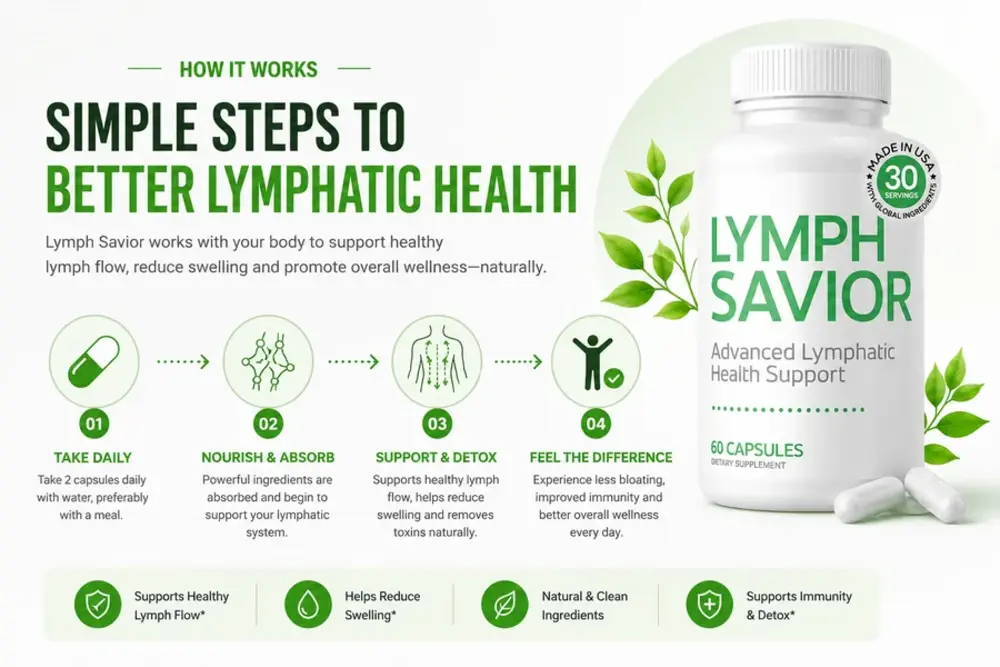
Take two capsules daily
The label and the vendor’s own diagram both say two capsules daily with water, preferably with a meal. Sixty capsules at two a day is thirty servings — one bottle, one month. 🌿
Plain capsules, ordinary absorption
There is no delivery technology here. These are standard capsules, so the botanicals are released and absorbed the way any oral herb is.
Two herbs act on vessel tone, nine are traditional
Horse chestnut and gotu kola are the two with venous research behind them. The remaining nine are mild diuretics and traditional alteratives. Lymph itself has no pump, so nothing swallowed moves it directly.
Judge it over 8–12 weeks, on a measurement
Botanical formulas are slow. Measure your ankle at a fixed point at the same time each evening once a week. The 180-day window is far longer than a fair trial. 🔁
What it may help with
Six claims, ranked by how well they hold up 💧
Heavy, aching legs by evening
The claim this formula can best defend, because it holds the two herbs with real venous research. Whether the doses are meaningful is the open question.
Fluid balance and puffiness
Cleavers and burdock are traditional mild diuretics. If salt, heat or long hours standing drive your puffiness, a gentle diuretic effect is a believable small contribution.
Capillary and vessel support
Gotu kola’s researched mechanism is capillary filtration and vessel wall integrity — a more specific and more credible claim than “drainage.”
Immune botanicals
Echinacea and olive leaf cover the immune half of the marketing. Both are better studied for short courses than for daily use across six months.
Antioxidant load
Yerba mate, olive leaf and ginger all show measurable antioxidant activity in lab assays — the most defensible shared property of the blend.
Simple to run
Two capsules once a day with a meal. No loading phase, no cycling, nothing to mix. Simplicity genuinely helps people stay consistent across three months.
Buyer feedback
What buyers report, complaints included 💬
We publish mixed feedback on purpose, and we do not print a star average. There is no independently auditable review source for this product, and a number we cannot stand behind would make this page look more trustworthy while being less true.

“I went in for the heavy legs after long days on site. 🌿 By about week seven the evening heaviness was easier, though I also started walking at lunch so I cannot give the capsules all the credit. Easy to swallow, no stomach trouble.”

“What I keep coming back to is that it says eleven botanicals and gives you eleven names and not one milligram. ⚠️ Naming an ingredient is not the same as telling me how much is in there. I used the refund and it went through without a fight.”
“Appreciated that the caffeine from the yerba mate was actually mentioned up front rather than hidden. ☕ I moved my dose to breakfast and slept fine after that. Ankles are a bit better, though I also cut way back on salt at the same time.”
Pricing
Three packages, single bottle available 💵
Prices are the official checkout’s as last reviewed on 2026-10-07. The vendor changes promotions without notice, so confirm before paying.
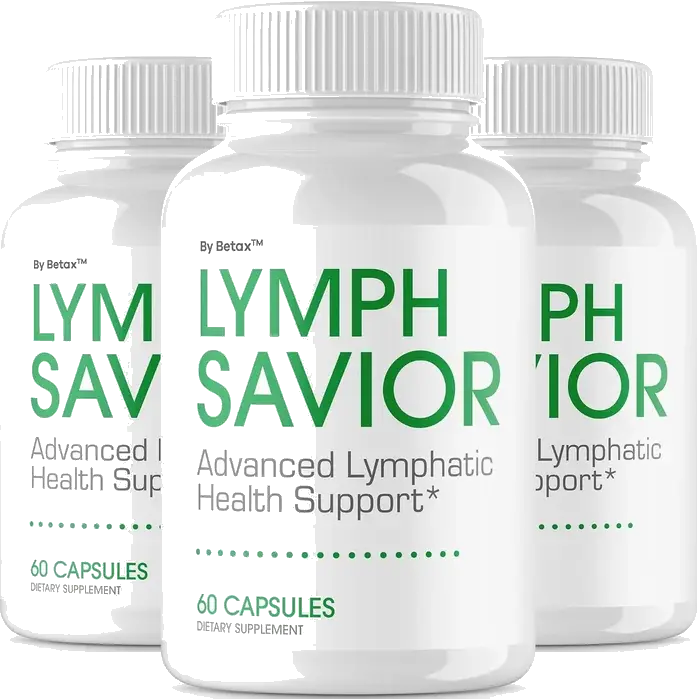
1 Bottle
$79 per bottle · $79 total 30-day supply- ✓ 1 bottle — 30 days
- ✓ Shipping charged
- ✓ 180-day guarantee
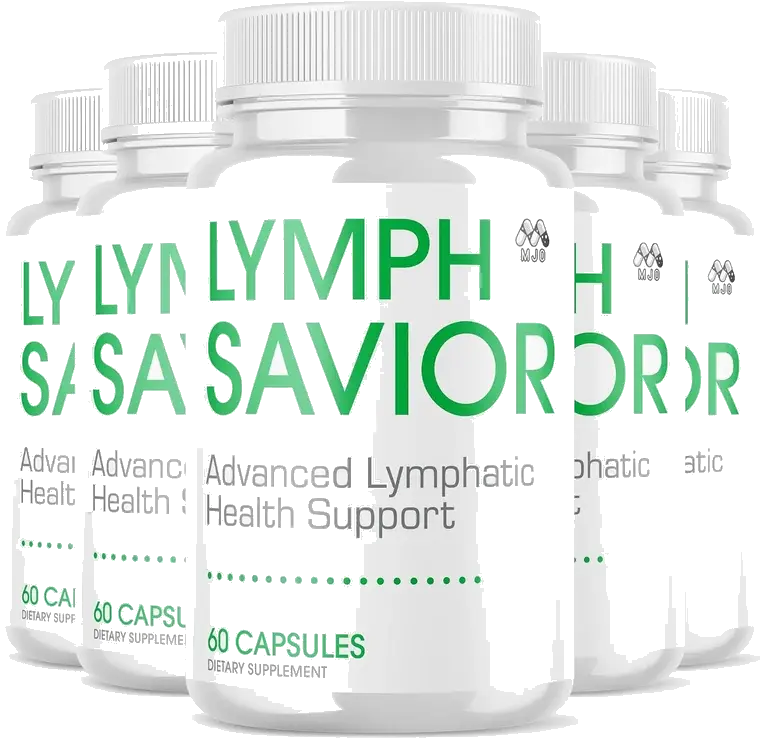
6 Bottles
$49 per bottle · $294 total 180-day supply- ✓ 6 bottles — 180 days
- ✓ Free US shipping
- ✓ Lowest cost per day
- ✓ 180-day guarantee
3 Bottles
$69 per bottle · $207 total 90-day supply- ✓ 3 bottles — 90 days
- ✓ Free US shipping
- ✓ 180-day guarantee
💡 This funnel offers something the others do not
Several checkouts for this product start at a two-bottle minimum. This one sells a single bottle at $79. For an unverifiable blend, being able to test one month before committing is worth more than the per-bottle saving on a six-pack you have not tried — especially since a fair trial is eight to twelve weeks and you can reorder at the better rate. More on our pricing breakdown.
The 180-day guarantee, in plain terms 🔁
The vendor advertises a full refund within 180 days of purchase. In practice: email support for a return authorisation number before sending anything back, keep your order confirmation, and expect refunds to post in roughly 7 to 10 business days after the return arrives.
Return postage is normally the buyer’s cost — the detail most reviews omit. Our refund policy page and the step-by-step walkthrough cover it.
FAQ
Lymph Savior questions, answered straight
No. All eleven botanicals are named; not one carries a milligram figure. That is legal under US supplement rules, which allow a blend to be declared as a total weight with components listed in descending order. It also means nobody outside the manufacturer can tell whether the two evidence-backed herbs are present at researched levels or as traces. See our naming vs disclosing guide.
Two. The bottle reads 60 capsules and carries a 30-servings badge, and the vendor’s own how-it-works graphic says “take 2 capsules daily with water, preferably with a meal.” Some pages describing this product say one capsule daily, which contradicts both the bottle and the brand’s own diagram. Follow the printed label on the bottle you receive.
Two. Horse chestnut seed extract has randomised trial evidence in chronic venous insufficiency at roughly 300 mg of standardised extract twice daily. Centella asiatica (gotu kola) has a smaller but real body of venous research at about 60–120 mg of standardised triterpenes daily. The other nine are traditional herbs with historical use and no clinical evidence for lymph flow.
Yes. Yerba mate is a naturally caffeinated plant and it is on the ingredient list. Credit where it is due — the vendor states this openly rather than burying it. The amount is unknown, so take your serving in the morning if you are caffeine sensitive.
Anyone pregnant or nursing, anyone under 18, and anyone taking anticoagulant or antiplatelet medication — horse chestnut, red clover and ginger all carry bleeding-risk interactions. People on blood-pressure or diabetes medication should clear olive leaf with a prescriber; people with autoimmune conditions are commonly advised to avoid echinacea. A pharmacist can check your medication list against the panel in two minutes, free. Full list on our side effects page.
Swelling that comes on suddenly, affects one leg only, or is painful, hot or red needs same-day assessment — that pattern can indicate a clot. Swelling with breathlessness, chest discomfort or rapid weight gain over a few days needs urgent care. Persistent swelling in both legs deserves a proper work-up for heart, kidney, liver, thyroid and medication causes before any supplement is reasonable.
One bottle is $79 with shipping charged, three bottles $207 ($69 each) with free US shipping, and six bottles $294 ($49 each) with free US shipping. A single bottle is available on this funnel, which makes a low-risk first month possible. See the full breakdown on our pricing page.
The vendor advertises a full refund within 180 days of purchase. Request a return authorisation number before shipping anything back, keep your order confirmation, and budget for return postage, which is typically the buyer’s cost. Our step-by-step refund walkthrough covers the process.
Read next
Before you decide 📚
Decide with the label in front of you 🌿
You now know which two herbs carry the research, what the label omits, where a capsule ranks against the free fixes, and how the refund runs. That is more than most buyers have. Orders go through the official checkout only.
Check Today’s Price180-day money-back guarantee · 60 capsules per bottle · not evaluated by the FDA · not a treatment for any disease